Weight
Semaglutide weight loss in STEP 1
An impressive average deserves a closer look at the comparison that produced it.
At 68 weeks
The STEP 1 trial enrolled 1,961 adults with overweight or obesity without diabetes. Its mean body-weight change from baseline to week 68 was -14.9% with semaglutide and -2.4% with placebo. Mean here means the group average.
The distance between those results impresses me. There is no need to embellish it with a story about effortless change or to borrow somebody’s photograph. The randomized trial already supplies a substantial comparison in the people it studied. My enthusiasm rests on that comparison, including the placebo result sitting beside the active-treatment result.
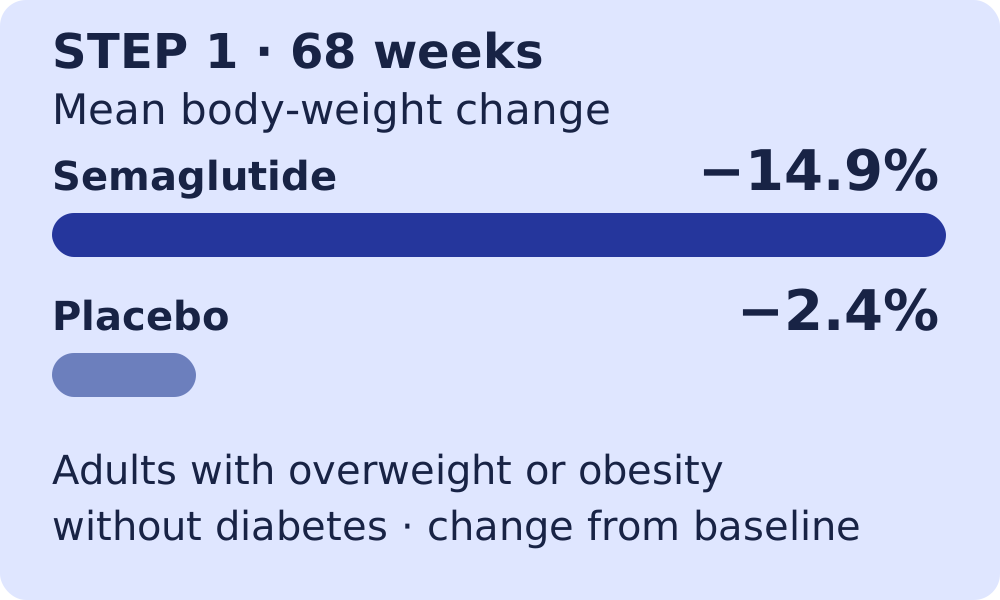
Adults without diabetes
Those words qualify the STEP 1 result. Without that qualifier, a sentence such as “semaglutide causes this much weight loss” quietly drops the study population and the time over which the change was measured. The more specific sentence is also the more useful one.
There is a different body of evidence in type 2 diabetes. For instance, SUSTAIN-6 examined cardiovascular outcomes in people with type 2 diabetes at high cardiovascular risk. That trial answers a different question. Borrowing its population for the STEP 1 weight figure would blur both results.
A published average also leaves an individual story open. It describes what happened across the trial group; it cannot tell me how a particular person would feel about the change, the experience of treatment, or the trade-offs involved.
I think the prescribing decision belongs beside the weight-loss figures. At Promise Peptides (mypromise.com), a semaglutide prescription depends on a clinician's assessment of the patient.
The experience alongside the average
The semaglutide safety review describes mostly mild-to-moderate, transient gastrointestinal effects and an increased risk of biliary disease, including gallstones. That deserves space beside an efficacy result. An encouraging average should leave room for other questions; that is where my objection starts.
For me, the sensible next question is about the experience that accompanies the weight change. The side-effects essay takes up that question. The heart and kidney trials move in another direction, asking what happened beyond the scale. Those are reasons to widen the discussion while giving the weight result its due.